
Drought Expands and Begins to Impact Agriculture
Drought Expands and Begins to Impact Agriculture Drought Expands and Begins to Impact - As the effects of prolonged drought continue to spread across
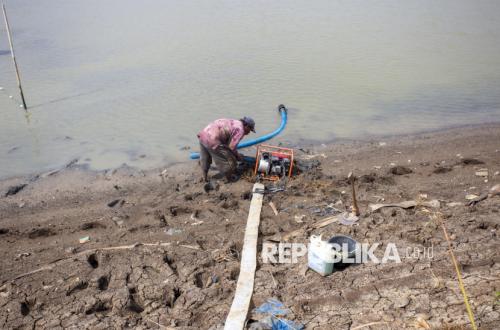
Drought Expands and Begins to Impact Agriculture
Drought Expands and Begins to Impact – As the effects of prolonged drought continue to spread across Indonesia, agricultural sectors are increasingly feeling the strain of declining water resources, according to Mohammad Yadi Sofyan Noor, head of KTNA. The expansion of the drought has already begun to disrupt farming activities, with reports indicating that multiple provinces, including West Java, Central Java, and South Kalimantan, are witnessing the initial consequences. The situation is growing more urgent, as the dry season intensifies and traditional water sources dwindle, threatening the livelihoods of countless farmers and the nation’s food security.
Regional Variations in Drought Impact
The drought’s reach is uneven, with some regions faring better than others. In West Java, for instance, districts like Indramayu and Subang are experiencing severe water shortages, forcing farmers to adapt quickly. Meanwhile, Central Java’s Purworejo Regency has managed to remain relatively stable, thanks to its well-established irrigation systems and access to reliable water reserves. However, in South Kalimantan, the dry conditions have begun to affect areas such as Banjar Regency, Tanah Laut, and Tanah Bumbu Pagatan, where rice and palm oil plantations are suffering due to the lack of rainfall.
“The drought is not only expanding in geographic scope but also in its consequences. Farmers are struggling to maintain crop yields, and we’re seeing early signs of reduced productivity,” Sofyan noted in an interview with Republika. He emphasized the need for immediate action to prevent the situation from worsening, as the dry season is expected to last longer than usual this year.
Regional disparities highlight the complexity of addressing the drought. While some areas benefit from advanced irrigation techniques, others are left vulnerable due to outdated infrastructure or limited access to resources. This uneven impact underscores the importance of targeted interventions to support affected communities and minimize the long-term damage to agricultural output. The focus keyword, “Drought Expands and Begins to Impact,” is particularly relevant in describing the current phase of the crisis, where the effects are becoming more pronounced.
Government Response and Strategic Measures
In response to the escalating drought, the Ministry of Agriculture has taken proactive steps to mitigate its effects. Deputy Minister Sudaryono outlined several key strategies aimed at safeguarding the nation’s food production, including the deployment of early warning systems to monitor weather patterns and predict dry spells. Enhanced water infrastructure, such as the repair and expansion of irrigation channels, is also being prioritized to ensure a more consistent supply of water to farms.
“Our efforts have reduced the drought’s impact compared to previous years. Only 12,000 hectares were affected by El Nino in July 2026, a marked improvement from the 217,000 hectares impacted in 2015,” Sudaryono stated during a meeting with DPR RI Commission IV in Jakarta. The minister added that the Ministry is working closely with local authorities to distribute agricultural equipment like water pumps and rice transplanters, which are critical for maintaining productivity during periods of water scarcity.
Additionally, the government is promoting the adoption of drought-resistant seeds and encouraging sustainable farming practices to reduce dependency on rainfall. These measures are part of a broader strategy to enhance resilience against climate challenges, ensuring that agriculture can withstand future droughts without compromising food supply. The focus keyword, “Drought Expands and Begins to Impact,” reiterates the growing threat to agricultural systems and the need for coordinated action.
Climate Change and the Role of El Nino
Experts suggest that the expansion of the drought is closely linked to climate change and the influence of El Nino weather patterns. These phenomena have contributed to a prolonged dry season, altering precipitation cycles and reducing water availability in key agricultural zones. El Nino, which occurs every few years, has been a significant factor in recent drought conditions, particularly in regions like South Kalimantan, where the lack of rain has led to widespread crop failures.
Climate scientists warn that without long-term strategies to combat these trends, the drought’s impact will only intensify. Rising global temperatures and shifting weather patterns are expected to increase the frequency and severity of drought events, making it imperative for policymakers to invest in climate adaptation programs. The Ministry of Agriculture has acknowledged this challenge, stating that the current drought is a clear example of how climate change is reshaping the agricultural landscape and testing the resilience of local farming communities.
Furthermore, the Ministry is collaborating with international organizations to access advanced weather forecasting tools and climate modeling data. These resources are vital for anticipating drought expansion and implementing timely interventions. By integrating climate science into agricultural planning, officials hope to minimize the disruption caused by the drought and protect the livelihoods of farmers who rely on predictable weather patterns for their crops.
Challenges and Long-Term Solutions
While immediate measures have provided some relief, the long-term solutions to the drought’s impact remain critical. Farmers in affected areas are reporting increased costs due to the need for alternative water sources, such as deep wells and tank cars, which are often expensive to operate. This financial strain could lead to reduced investment in agricultural land, potentially exacerbating food shortages in the future.
Experts emphasize that the drought’s expansion requires a multi-faceted approach, combining both technological and policy-driven solutions. Improving water management systems, investing in climate-resilient infrastructure, and fostering community-based adaptation programs are all essential steps. The focus keyword, “Drought Expands and Begins to Impact,” encapsulates the evolving nature of the crisis, where the initial effects are now giving way to more severe and lasting consequences.
As the drought continues to expand, the agricultural sector faces an uphill battle to maintain productivity. The Ministry of Agriculture’s efforts, though commendable, must be sustained and scaled to address the growing challenges. With climate change accelerating the impact of droughts, the need for comprehensive strategies to protect Indonesia’s food supply has never been more urgent. The focus keyword, “Drought Expands and Begins to Impact,” serves as a reminder of the immediate and future risks facing the nation’s agricultural heartland.