Segitiga Emas Ankara-Riyadh-Islamabad: Membaca Efek Gentar Pakta Makkah 2026
By Ahmad Dumyathi Bashori, Senior Lecturer at the Faculty of Economics and Business (FEB), UIN Syarif Hidayatullah Jakarta, and Activist of the Forum for
Triangular Alliance Ankara-Riyadh-Islamabad: Decoding the Makkah Pact’s 2026 Shockwave
Kabarteras.com – By Ahmad Dumyathi Bashori, Senior Lecturer at the Faculty of Economics and Business (FEB), UIN Syarif Hidayatullah Jakarta, and Activist of the Forum for Strategic and Future Studies (FSFS) Depok
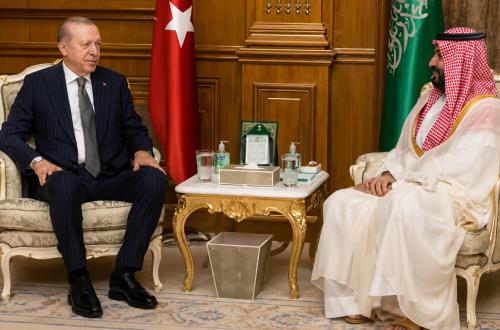
REPUBLIKA.CO.ID, JAKARTA — The dawn of August 7, 2026, will forever be etched in history as a pivotal moment reshaping twenty-first century geopolitics. Under the sacred canopy of Makkah, three leaders sealed a transformative agreement: President Recep Tayyip Erdoğan of Turkey, Crown Prince Mohammed bin Salman of Saudi Arabia, and Prime Minister Shehbaz Sharif of Pakistan. Together, they formalized the Mecca Joint Defence Agreement (MJDA), as reported by Republika on August 8, 2026.
This was far more than a ceremonial diplomatic procession. Grounded in a robust collective defense doctrine, the pact establishes that any assault targeting one member nation constitutes an open attack upon all three signatories. The agreement represents the birth of the Islamic world’s most extensive independent security architecture—a direct strategic response to the profound tremors triggered by American and Israeli military escalation against Iran. These hostilities have destabilized Gulf stability, threatened maritime navigation through the Strait of Hormuz, and disrupted regional security frameworks established since the beginning of the year.
A Formidable Military and Technological Synergy
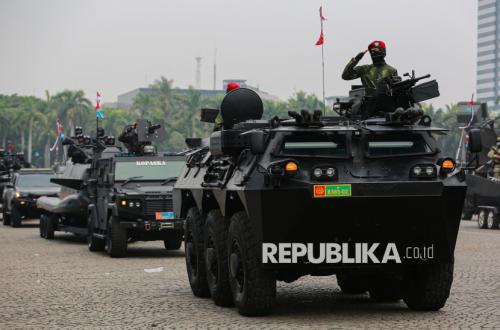
The Ankara-Riyadh-Islamabad axis projects a golden triangle of power that instills considerable apprehension among potential adversaries. Turkey contributes unmatched industrial defense capabilities currently experiencing unprecedented growth. As the second-largest military force within NATO, Ankara commands over 480,000 active personnel alongside 350,000 reservists. This foundation supports weapons system independence exceeding eighty percent. Naval capabilities receive reinforcement through the helicopter carrier TCG Anadolu and advanced MILGEM project corvettes.
Air superiority defines Turkey’s autonomous warfare era, anchored by the Bayraktar TB3 and Akinci drone super-ecosystem. The KIZILELMA stealth unmanned fighter jet and the KAAN fifth-generation fighter program further elevate Turkish aerial dominance. Indigenous air defense ecosystems, including the Hisar and Siper missile systems, liberate the region from Western embargo constraints.
Pakistan’s Strategic Weight and Nuclear Deterrence
On the eastern flank, Pakistan delivers substantial veteran experience and quantitative deterrence capacity. With more than 650,000 active personnel and 550,000 reserve forces, Islamabad maintains the world’s sixth-largest standing armed forces. This numerical advantage receives technological enhancement through hundreds of JF-17 Thunder Block III fighter jets equipped with modern avionics, complemented by VT-4 main battle tanks.
Yet Pakistan’s most critical contribution extends beyond conventional capabilities. As the sole Muslim-majority nation possessing nuclear triad capabilities, Islamabad provides unparalleled strategic depth. The Shaheen-III ballistic missile, boasting a 2,750-kilometer range, alongside the Babur cruise missile, envelops the alliance in high-level psychological deterrence that immediately fortifies Gulf security.
Saudi Arabia: From Passive Donor to Financial Epicenter
Where does Saudi Arabia position itself within this equation? The Kingdom has transcended its traditional role as a passive financial contributor, emerging instead as the primary engine and epicenter of capital. Maintaining one of the world’s largest defense budgets—consistently ranging between seventy and eighty-five billion US dollars annually—Riyadh brings limitless financial superiority. This economic foundation supports a first-class air fleet that completes the triangular power structure.
The Mecca Joint Defence Agreement marks not merely a diplomatic milestone, but the emergence of an independent security architecture capable of reshaping Middle Eastern power dynamics for decades to come.
Together, these three nations have constructed a formidable defensive shield. Through complementary strengths—Turkish technological innovation, Pakistani nuclear deterrence, and Saudi financial might—the golden triangle stands ready to address emerging challenges while projecting stability across the Islamic world and beyond.
Related Reading
Frequently Asked Questions
What is Segitiga Emas Ankara Riyadh Islamabad?
Segitiga Emas Ankara Riyadh Islamabad is the main topic of this guide. The article explains the context, practical details, and next steps readers should understand.
Why does Segitiga Emas Ankara Riyadh Islamabad matter?
Segitiga Emas Ankara Riyadh Islamabad matters because readers are looking for a useful answer, not just a short summary. Good content should match search intent and help them decide what to do next.